23 November 2006

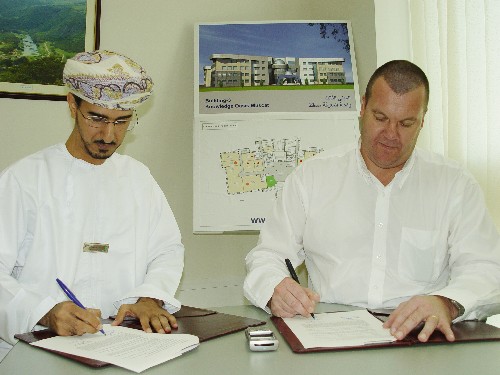
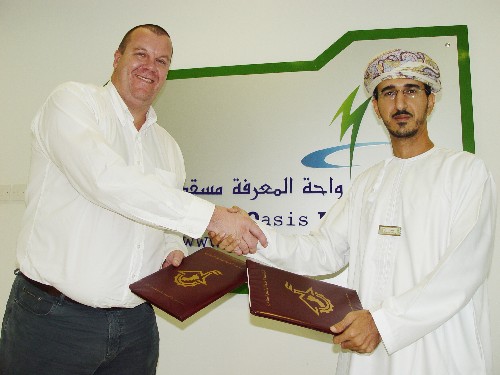
De Montfort University Links with KOM

The organisers of eGames (www.egamesoman.blogspot.com), a two-day international conference on mobile and serious game, scheduled to be held 10 – 11 December at the Crowne Plaza Hotel, has partnered with staff from De Montfort University in the UK to assist in the debate over the current and future needs of the Gulf’s gaming community.

Recognised as gaming industry experts, Michael Powell, Steve Abrahart and Chris Hinton from De Montfort University’s Faculty of Art & Design, will deliver a full-day gaming workshop – aimed at the Omani youth market – at the Middle East College of Information Technology on 9 December. According to Mulki Al Hashmi of KOM’s Marketing Department and eGames Workshop Co-ordinator: “The workshop will cover storyboarding, character design and development, animation, narrative storytelling and visual effects. We’re delighted with the tremendous response that this full-day program has received from the local student community.”

The De Montfort University trio will also deliver a conference panel on Designing Learning Based Games. Michael Powell said: “Computer games are getting serious. Not only as a modern popular entertainment format, but also as a powerful vehicle for education, cultural dissemination, training, public policy, healthcare, simulation and many other applications which fall outside the entertainment norm. Historically, educational games have been a bit like a cabbage sandwich - not very tasty. Indeed, more people in education and training are discovering the real potential of games. This is what we intend to highlight in our session.”

De Montfort’s Chris Hinton (pictured), commented: "Our involvement in the eGames workshop and conference re-enforces the University of De Montfort’s mission to provide students with the necessary skills and knowledge to enter into the games industry and I and my colleagues are delighted to be appearing as workshop presenters and guest speakers at eGames."

He added: "We fully support eGames as it provides a unique opportunity for both experts in the industry, business and educators to exchange ideas and perspectives as well as sharing understanding and best practice relating to the future of the Gulf’s gaming community."

eGames is the first conference in the Gulf region that brings together game developers, telco providers, publishers, game producers, educators, marketers and other professionals interested in the mobile and serious gaming space,” said Mohammed Al Maskari, Director General, Knowledge Oasis Muscat and organizer of the annual eGames program.

The conference will feature debates with international speakers sharing their views on the future of mobile and serious game development. In addition to De Montfort Unversity staff, Ericsson, Nexgen Studio, Oman Mobile, The Consultants-E, Nawras, Sun Microsystems, Game Frontier and the Serious Gaming Department from Coventry University will lead discussions on mobile game development; telcos and mobile entertainment; serious gaming and its applications to education and business; and competitive computer gaming and eSport. “We saw from last year’s conference that eGames appeals to business, government and education – if you’re a tour operator or running a government department, a bank, an insurance agency, a college or even an oil company you should be interested in learning how to leverage mobile and serious gaming not only to promote your products, services and brand but also train your staff – gaming is the next frontier for training and marketing,” said Al Maskari.


18 November 2006

Get an eGames Discount

Conference & Workshop Registration Fees

If you register for eGames before 22 November you will qualify for a 15% discount on the conference delegate fees.

Workshop: The eGames pre-Conference Workshop (Saturday 9 December) is free of charge. However, it is limited to 100 attendees and places will be allocated on a first come first serve basis. If you want to attend, e-mail your name and contact co-ordinates to: mulkie@kom.om

Conference: eGames is a not-for-profit event, however to help cover general expenses the registration fees are:

  • RO150 (US$380)
  • RO125 (US$325) for public sector employees
  • RO50 (US$130) for full-time tertiary students and academic staff

Fees include all sessions, documentation, food, refreshment and the Gala Dinner.

To register for the Conference contact Ibtisam Al Faruji on: ibtisam@kom.om

Nexgen Studio Presents at eGames

Muscat – Singapore-based Nexgen Studio (www.nexgenstudio.com), one of the world's leading gaming companies, today announced that CEO Alvin Yap, will present at the eGames Conference, to be held at the Crowne Plaza Hotel, 10 – 11 December.

Nexgen Studio works very closely with Nanyang Technological University and the National University of Singapore. Together, a beneficial mutual relationship has been created, harnessing the strength of R&D work from academia and industry knowledge and applications from Nexgen Studio. Collaboration work ranges from animation algorithms to artificial intelligence.

"Alvin will talk about the challenges facing mobile games development and distribution. He will also touch on the cross pollination of converging technologies and business models," said a Nexgen Studio spokesman.

eGames is organized by Knowledge Oasis Muscat (KOM) in partnership with Ericsson, Oman Mobile, Sun Microsystems, Middle East College of Information Technology, TIGA, and The Knowledge Mine business incubator program.According to Mohammed Al Maskasri, Director General, KOM: "The two-day conference will provide attendees with the opportunity to hear from leading game developers, telcos, marketers and trainers and get their perspective on the growing opportunities within the increasingly viable and lucrative mobile and serious gaming industry." Conference sessions include:

The conference will grant attendees access to a high level, influential line-up of speakers including representatives from Oman Mobile; Ericsson; Sun Microsystems; Terris-Hill Productions; Game Frontier; Nexgen Studio; Yahoo!; De Montfort University; Motorola; and Nawras.

16 November 2006

TKM Looks for eGaming Start-ups

Education and mobile games may seem like an unlikely match but an initiative run by Knowledge Oasis Muscat (KOM) is trying to persuade students to consider a career in the games industry.

In partnership with Ericsson, Oman Mobile, Infocomm, Sun, ANGILS, Oman Economic Review, TIGA, the Middle East College of Information Technology (MECIT) and the Knowledge Mine business incubator program, the Rusayl-based technology park will run eGames: The State of Play (
www.egamesoman.blogspot.com) 10 – 11 December 2006, at the Crowne Plaza Hotel.

eGames is a two-day gaming conference that will focus on mobile and serious gaming. As well home grown gaming experts the event has also attracted speakers from Sweden, the UK, Korea, Singapore, the UAE, Oman, Canada and Spain, so attendees are assured of walking away having shown, discussed and seen state of the art innovation in the mobile and serious gaming industry.

“We’re looking at mobile gaming as revenues from this sector are expected to grow from US$3bn in 2006 to US$10bn by 2009, this increase is being driven by continued growth in subscriber numbers, an increase in roll-out of 3G services, falling game prices and a new generation of made for mobile games,” said Mohammed Al Maskari, Director General, KOM and organizer of eGames.

“Mobile games have come of age. They’re no longer the poor relations of console and PC games. They are a different family of entertainment products with their own set of characteristics,” continued Al Maskari.

“If we look further down the line, I see continued growth of mobile subscribers in Oman and across the Gulf, and given the global mobile gaming growth projections the revenue streams for the region’s telco providers and mobile game developers will soar,” he added.

In addition to the conference, KOM is also organizing a one-day gaming workshop in partnership with MECIT. The workshop is aimed at college students and will be run by staff from the Faculty of Art and Design at De Montfort University in the UK. According to Al Maskari the workshop is intended to promote the games industry as a career option to students. "When we go to colleges, we find it’s not something students have thought about doing," said Ibtisam Al Faruji, KOM’s Head of Marketing. "We want to encourage students with an interest in drawing, animation and story writing that the gaming industry is something they could get into. In fact, we’re very keen to attract gaming start-ups to set-up in the Knowledge Mine business incubator program," she said.

On the question of financing a gaming start-up, Al Maskari said: “For people with truly inventive, credible investments, approaching angel investors, venture capitalists and similar routes of funding isn't as hard as the impression people have of it. If you are credible and have done the required thinking, pretty much anyone will talk to you."

23 October 2006

Martine Parry: eGames Speaker Profile

Martine Parry (pictured) will present on two panels at eGames 2006. She is Director of Apply Group and also of trade association ANGILS. Martine has held senior positions in the knowledge industry for 20 years.

Following graduation in Physics from Kings College, London University in 1986, Martine spent eight years in the AI industry, two as a Research Engineer in computer vision systems with GEC Marconi and the remainder with various leading visualisation, simulation, pattern recognition and performance support tools and service organisations, developing business across sectors including defence, the intelligence community, energy, telecommunications, health and finance.

She also developed the telecommunications market for leading European software house Admiral Computing (Group: 3000 employees and US$470m t/o and now merged with LogicaCMG) during the first major period of the industry’s deregulation in the UK.

Since 1996 she has worked within the learning, CGI and games sectors, developing new projects, scoping application needs and analysing sectors and application segments.

Martine founded Apply Group Ltd, a leading business consultancy in order to continue this work. In addition to the core consulting business with Apply Group, she has been responsible for driving the serious games association ANGILS over the last few years and is now transitioning it to a full trade association by embracing organisations as members in addition to individuals. This is driven by a maturing market to some degree.

ANGILS is attracting attention and membership from a global audience as we seek to address the key business, design and deployment issues of knowledge transfer from the games and entertainment sectors to the knowledge industries, and vice versa.
www.angils.org

18 October 2006

Pro-Gaming All the Rage

It's 7:30 on a Tuesday evening and I shout out to my sons that dinner’s on the table. They shout back: “We’re coming, just finishing off this match. We’ll be there in 5 minutes.” They’re playing Pro-evolution Soccer 5 on a Sony PlayStation and it’s an “important game.” Welcome to the world of eSports and competitive gaming.

Today, there are full-time, professional computer game players - the most successful of whom make US$100,000 a year by playing in competitive gaming tournaments. Thinking of professional gaming as a sport may seem a little strange, but those who are excelling in it devote the same type of skill, passion and commitment that a real-world athlete does.

“In Jaffer Mir we’ve one of Europe’s leading specialists presenting on competitive gaming” remarked Mohammed Al Maskari, Director General, Knowledge Oasis Muscat (www.kom.om) and organizer of eGames
, 10 – 11 December, Crowne Plaza Hotel. “Jaffer’s the Managing Director of Game Frontier Ltd (www.gamefrontier.com) a UK based digital entertainment and computer gaming company that’s leading eSports across Europe and the North America. We’re delighted to have such an expert present at eGames,” said Al Maskari.

The stereotype of computer gamers as techies competing from their bedroom is shattered by the professional gaming movement. Most of the games played at the competitive level require team-play, so by definition they are intensely social. Serious teams assign roles to each player; much like a football coach would assign a role to his midfield. Tactics are discussed prior to matches, and a post-match analysis often takes place. “This is a sporting movement that’s getting ever more sophisticated and popular amongst young people and it’s not just teenagers, it’s young professionals that make up the bulk of players. Just as a football fan might follow every move or match of Chelsea’s John Terry, many gaming enthusiasts follow their favourite teams or players. Go to any Internet Café around Muscat and you’ll find folk competing. We’ve even got a World Cyber Games - an Olympic style competition where teams representing each country play for medals in a variety of different computer game tournaments,” said the KOM Director General.

Take a look at any sport today and you'll find sponsors, brand names on stadiums to logos on football shirts. Professional gaming is no exception. Since its inception sponsorship has played a major role, enabling players the means to pay for their expenses while focusing on their sport. Four Kings, a British professional gaming team is sponsored by Intel. Sports gaming giant Johnathan Wendel, aka Fatal1ty, (www.soundblaster.com/fatal1ty/fatal1ty1.asp) is sponsored by game accessory manufacturer Auravision. Indeed, the biggest competitive gaming event on the calendar, the ATI/AMD Cyber X Games: Windows XP Championships in Las Vegas is sponsored by all the brands listed in the event's title as well as a host of other major names in the gaming and computer industries. “Just look at Korea as an example, sponsoring a professional gaming team makes good commercial sense. Fifteen million people, or 30% of the Korean population, are registered for online gaming, and that means a big marketing opportunity. In time, this will be happening here in the Gulf and if I were a marketer I’d be looking at pro eSports very seriously,” remarked Al Maskari.

17 October 2006

Ericsson's Mobile Java 3D Technology

A focus on cutting-edge Mobile Java 3D technology has made Sony Ericsson a preferred choice among game developers and a leader in mobile gaming.

In June, Sony Ericsson introduced its new Java platform, Java Platform 7 (JP-7), which supports the development of advanced games with high picture resolution and better 3D graphics, and makes it possible to run several applications simultaneously


We spoke to Peter Ahnegård, Content Acquisition Manager, Games & Graphics at Sony Ericsson who says the company has become a leader in Mobile Java 3D technology. “We were involved really early on in the mobile 3D era and we took on the challenge to educate operators and game developers on the technology. Today, the majority of our game developer partners are producing 3D games in addition to their 2D games. For example, Beach Mini Golf 3D and Extreme Air Snowboarding 3D by Digital Chocolate.”

The Preferred Choice
The benefit for game developers using Sony Ericsson’s platform is that they do not have to make changes to every game they produce to fit the various Java handsets on the market. “Our strategy is to base a number of devices on the same Java platform version. Not only does this save developers a tremendous amount of time and money, but it also means operators can spend less time on game verification later on,” says Ahnegård. “Game developers have said they are really happy with this approach, and recently Fishlabs, which is one of our game developer partners, stated that they only need a single binary code to support all our 3D handsets.”
Making games easily accessible to consumers

Sony Ericsson is not only focusing on making it easier for game developers to create games. The company is also making sure playing and accessing games becomes more attractive to consumers. “If people knew how to access mobile games in an easy way, the market would explode,” commented Ahnegård.

The Fun & Download service, which can be accessed through the company’s website and WAP service, is meant to make it easy for consumers to download all kinds of content, from video clips to games. “We now have a very good games offering on the portal and traffic has increased thanks to improved accessibility and promotions. Today, the major part of revenue from Fun & Downloads is games.

Another such service is PlayNow, (www.midlet-review.com/index?content=handset_review/sony_ericsson_w550i) which can be accessed through the menu option on phones. A service that is updated on a regular basis. “Sales have increased dramatically with new users accessing PlayNow and we’ll continue to develop the service in the year ahead by adding new functionality and improving the user interface,” commented Ahnegård.

Sony Ericsson has also been making mobile phones more attractive to gamers. The W550 and W600 Walkman phones, launched in 2005, and the K790 and K800 Cyber-shot phones, launched in 2006, are examples of this. These devices are very entertainment-focused and appropriate for games because they have two additional A and B gaming buttons on top of the screen and a screen display that can be rotated 90 degrees to support two-handed game control in landscape mode. This creates a PC or console-like game experience familiar to more-experienced gamers.

Sony Ericsson intends to continue developing new devices with gaming features, for example, the P990 smartphone, the M600 messaging device, and the W950 Walkman devices that will take mobile gaming into the future. According to Ahnegård: “Our UIQ 3 phones not only have hardware-accelerated 3D, they also provide better graphics than first-generation consoles.”

More Generic Games
In an effort to encourage people to play more games, Sony Ericsson is pre-installing games on all their devices. “Our job is to make sure operators have a solid and extensive offering for each device we introduce to the market,” comments Ahnegård.

Sony Ericsson has opted for a general selection of pre-installed games to attract a wide audience of gamers. “We are getting better at selecting pre-loaded content that suits the intended target audience, which means we are not only offering 3D action games. With our game developers, we are constantly discussing what types of games we and the operators need,” remarked Ahnegård.

The Future
Sony Ericsson is focusing on improving the gaming platform for the next generation of mobile phones. The company is looking for the best hardware and platform solutions to be able to help developers create exciting, high-quality games targeting different consumer segments.

Sony Ericsson’s efforts in establishing itself as a leader within mobile music is also having an effect on the type of mobile games the company will be offering in the future. Sounds is a lot more than just music. For Java ME and UIQ applications, it can mean everything from sound effects that make games rock to easy-listening instructions for applications such as language courses.

Ericsson Recommends
http://www.ericsson.com/ericsson/corpinfo/publications/telecomreport/archive/2006/august/marketing.shtml

http://www.ericsson.com/ericsson/corpinfo/publications/telecomreport/archive/2006/august/games.shtml

Get a MUVE On

With online teaching and training on the rise, the search is still very much on for the most effective way of delivering online courses, and encouraging interaction between participants at a distance. Second Life (www.secondlife.com), is the newest, hottest thing in the online teaching world. Gavin Dudeney of The Consultants-E (www.theconsultants-e.com) and presenter at Knowledge Oasis Muscat's eGames Conference (10 – 11 December, Crowne Plaza Hotel, Muscat) looks at the learning and educational opportunities offered by Second Life.

Harvard University are running classes there, and so are Trinity College Dublin. Suzanne Vega performs there, and Kurt Vonnegut talks about his writings ‘in-world’. You can even take a class in creative writing, or learn how to become a video director there. All from the comfort of your own home.

The place is Second Life, a three-dimensional online synchronous environment, known in technorati circles as a Multi-User Virtual Environment, or MUVE. The time is now. Think of a video game, where you can take on a 3-dimensional character (or ‘avatar’ in MUVE-speak) and visit an entire ‘world’, populated by real people, who are accessing Second Life from their own computers. You can chat, both via text or audio chat, exchange ‘objects’, even buy and sell land! Second Life may not be new – MUVEs have been around since the later 1970s - but it is most definitely sexy, to the point where the BBC Horizon series is planning to make a documentary about it, and it has appeared on BBC television and radio, and in magazines such as Business Week.

Founded by the Real Networks CTO Philip Rosedale in 2003, Second Life (SL) is a privately owned virtual world, which currently has approximately 740,000 users. In Second Life you sign up for free, design a 3D representation of yourself and move around a rich online world, in which the residents interact, build houses, design clothes, make gadgets, dance at virtual clubs and, yes, attend classes.

But is Second Life all just fun and games? There are plenty of people who refuse to refer to Second Life as an online game, and rightly so. Whilst there is plenty of gaming occurring ‘in-world’, there is also a burgeoning collection of more serious projects, from courses in ‘cyber law’ taught under the auspices of Harvard Law School (
blogs.law.harvard.edu/cyberone/), to awareness-raising projects for young people (http://www.holymeatballs.org), and even a group dedicated to discussing and exploring the potential for education in such environments (www.simteach.com).

So what is it exactly that makes Second Life more successful than other online social environments in recent history? And why are educators being drawn to it in droves?

Currently, most online teaching and training is done via Virtual Learning Environments (VLEs), or learning platforms – one of the most popular being Moodle. Yet there is something inherently flat and static in a VLE, based as it is on webpages. And no matter how much socialization work and pair and group interactions one builds into an online course in a VLE, one rarely has more than a flat photograph of each participant as the embodiment of their real life character, and emoticons and other emotion-conveying devices never really capture the essence of a person, nor entirely mitigate any potential for misunderstandings which may arise from the almost exclusive use of the written word. Despite the availability of text chat for communication, and even of voice chat in VLEs, online course still tend to lack the cut and thrust of real time interaction – the synchronous, or ‘real time’ element of communication.

For this reason educators are starting to look beyond the idea of a VLE to something that emulates the real world in a more immediate and recognisable form - and they are looking to MUVEs such as Second Life for the solution.

Second Life is particularly adept at handling media, supporting a variety of audio and video sources, as well as public text chatting, private messaging and audio communications A combination of these elements can provide a rich learning environment in which more traditional text-driven elements such as reading material can be delivered alongside real opportunities for communication which transcend the disembodied offerings of most online schools in which text chat and email play a large part, or tutoring is carried out by a faceless tutor working in a call-centre style environment.

Take a look at a set of personal interactions in Second Life and you will notice how much more ‘real’ and warm they can seem, when compared to similar examples in a VLE. With the physical presence of people in the same space or room (albeit in cartoon form) one has more of a sense of the person behind the text or voice, and this is enhanced by the clothing they have chosen, how they stand while they talk to you, if they wander off to look at something while you are chatting with them) and generally how they behave. My character, for example, can often be found wobbling on a unicycle, or on rollerblades or riding a virtual Segway, as I run training sessions in Second Life. Non-verbal forms of communication - as well as cultural features – are suddenly part of the communication again, and this is perhaps the most significant difference between a MUVE and other distance training platforms.

Whilst it is definitely too early on in the educational exploration of the possibilities of virtual environments to draw any final conclusions, the anecdotal evidence from the courses and classes in Second Life suggests that both learners and teachers find it a less intimidating and richer way of working than other distance tools they have experienced .

To get started in Second Life, you simply download the software (
www.secondlife.com) and sign up for a free account on the same site. Once installed and running, you create the virtual representation of yourself, customising your look, the clothes you wear, and how you move and interact with the other ‘residents’ and then set off to explore the ‘grid’, as it is called.

If you would like to try it out, come and look for my character, Dudeney Ge at EduNation in Second Life, a private virtual island designed for teacher training. Bring your rollerblades - I’ll be more than happy to help you explore.

12 October 2006

eGames Promotes Virtual Reality

David Wortley the Director of the Serious Games Institute at Coventry University (www.coventry.ac.uk/newthinking/html/serious.htm) and Gavin Dudeney (pictured) of The Consultants-E (www.theconsultants-e.com) will deliver a Second Life workshop at the forthcoming eGames conference.

What is Second Life (SL)? Created by San Francisco-based Linden Lab, SL is a virtual world and role playing environment that is completely owned by its participants. In this alternate world, personalized avatars, representing each player, interact to find and create entertainment, experiences and opportunity. “SL does pretty much what it says on the package: players control their virtual alter egos - avatars - to live an alternative life. It offers hundreds of activities, from the mundane to the strange: you can make friends, travel, attend a pop concert or visit vampire castles,” said Mohammed Al Maskari, Director General, Knowledge Oasis Muscat and organizer of eGames.

When asked about the SL trend, David Wortley said: "Second Life is moving up the list of places digital marketers want to be. Not only do these worlds give all brands the chance to connect with their constituents within a social construct, they also represent platforms where brands can enable players of the games with services, products and experiences. SL is growing by 22 per cent each month and if this continues there will be 3.6 million Second Lifers by July 2007.

According to recent research, the SL audience is made up of young professionals and not teenagers as many people think. This explains why there are about US$5.3 million (over RO2 million) in user transactions over the course of a month in SL. Players can purchase virtual products such as houses, clothing, accessories, game services and pay for them with real dollars via a currency system. SL uses Linden dollars, which players buy with real cash to conduct business with vendors within the game. Once the vendor decides to "cash out," their Linden dollars are converted back to US dollars - after Linden takes its fee.

But people aren't just buying goods - they're also building viable virtual businesses that provide them with real income. In fact, according to Forbes magazine, there are people making six and seven-figure incomes within the SL economy. “Numbers like these make SL difficult for companies, marketers and brands to ignore,” remarked the KOM Director General.

Brands that will be successful in SL are the ones that interact with the game seamlessly and find innovative and imaginative ways of talking to players. "Companies need to make sure they’re offering customers something they want," says Al Maskari. One company that is doing exactly that is the sports manufacturer Adidas. In September, Adidas set up a store in SL, to support the launch of its extra-bouncy A3 Microride trainers. SL residents can buy them for their avatars. Reebok – an Adidas owned company - is launching an SL version of its customisation service: players will be able to design trainers for their avatars and also order real versions for themselves. “Reebok is providing consumers with something that they actually want to experience, not just bombarding them with meaningless marketing messages,” said Al Maskari. But should other brands be considering SL? “I think so, it offers an opportunity to reach an audience that can be difficult to connect with. The folk on SL are totally immersed in the environment, so they don't really interact with magazines, TV or other media," says Al Maskari.

Talking about where SL is leading us, Maskari said: “I would think that before 2015 - just nine years away - VR technology will give us fully realistic experiences for all practical purposes. Then there will be fully immersive VR with direct stimulation of the brain: real virtuality as good as the physical universe, while, of course, retaining the possibility to allow users to do things which would be impossible in physical reality, for example, flying over Jebel Akhdar like a bird or walking on the Moon without a spacesuit.”

“Isn’t it marvellous that this type of event and discussion is taking place in Muscat? Knowledge Oasis Muscat really is putting Oman on the global digital map,” Al Maskari said proudly.

10 October 2006

Ericsson Backs eGames

Ericsson today announced the company is joining forces with Knowledge Oasis Muscat (KOM), the Rusayl-based Technology Park, and sponsor eGames 2006, scheduled for 10 – 11 December at the Crowne Plaza Hotel (www.egamesoman.blogspot.com).

On the conference, organiser Mohammed Al Maskari, Director General, KOM said: "We feel that eGames is well timed, happening at this rapidly moving point in the mobile and serious gaming industry as more sophisticated gaming products and gaming enabled mobile phones start to hit the consumer market and when globally gaming is worth more than cinema, video and CD sales."

According to Al Maskari, the eGames Conference is dedicated to meeting the needs of professionals focused on mobile and serious games and their educational and commercial applications. "Attendees will include decision-makers setting the standards and looking for insights to improve their businesses and they come to eGames to get the opportunity to drill down to the key issues," said KOM's Director General.

"By delivering the conference keynote address Ericsson will play an important role at eGames. We're delighted to welcome them as partners, they bring with them a wealth of international experience in the gaming space. In addition to Ericsson's participation we've confirmed presenters from Europe and North America that are at the bleeding edge of the gaming industry, it'll be an exciting two days," remarked Ibtisam Al Faruji, KOM's Head of Marketing.

Commenting on their involvement, Peter Andersson, General Manager for Ericsson in Oman said: "We fully support eGames as it provides a unique opportunity for experts in the gaming industry, business and education to exchange ideas and perspectives as well as share understanding and best practice relating to the future of the Gulf's growing mobile and serious gaming community."

06 October 2006

Business Week Introduces Mobile Content

In response to the growing demand for sophisticated and relevant content for mobile devices such as smartphones, PDAs and other handheld computers, Business Week has launched a new portable-electronic content delivery product, Business Week Mobile Edition. Starting in September, all of the high-quality content readers have come to expect from Business Week is now available free of charge at www.businessweek.mobi.

As Business Week advances on the mobile frontier with a new product offering, Microsoft Windows Mobile will support its efforts as the exclusive on-screen advertiser on Business Week Mobile Edition for 2006, and will be integrated into the Business Week Mobile Edition advertising campaign.

As the first global magazine to use the ".mobi" designation, Business Week hopes to provide easy recognition and ease of use to consumers who wish to access its content on their mobile devices. Consumers will soon be able to recognize Web sites specially designed for use by mobile phones by the new ".mobi" suffix, which is being introduced alongside the popular ".com," ".org," and other domains.

"Business Week Mobile Edition presents an ideal platform for providing professionals with timely insight when, where, and how they want it and for our launch sponsor, Windows Mobile, to reach this 'on-the-go' audience," said BusinessWeek.com Senior Vice President and General Manager, Roger Neal.

Yahoo and Mobile Advertising

A "select group of advertisers" are participating in the test (http://mobile.yahoo.com/searchmarketing/) of sponsored listings on mobile web search results, according to (http://blog.searchenginewatch.com/blog/061004-090744) the Search Engine Watch blog. The number of advertisers will increase as the program is rolled out. Consumers who click on the sponsored links will be taken to the advertisers' mobile website or a landing page to get more information about the advertisers' offerings and will be able to call the advertiser.

Yahoo had already been testing mobile sponsored search in Japan and the UK. In early September, Google announced that it was testing a mobile version of its popular AdWords ad offering, MediaWeek
(www.mediaweek.com/mw/news/interactive/article_display.jsp?vnu_content_id=1003219561) points out.

Response rates of mobile pay-per-click ads tend to be higher than online because of increased relevance and reduced ad clutter.

Yahoo's Mobile Web service, available on most mobile phones via major operators in the US and UK, provides access to Yahoo's Mail, Messenger, Search, News, Finance and Sports services.

01 October 2006

Serious Games Expert Set to Speak

David Wortley the recently appointed Director of the Serious Games Institute at Coventry University, an international hub for e-games technologies applied to non-leisure/entertainment applications such as e-learning, simulation and marketing has been confirmed as a keynote speaker at eGames 2006 scheduled to be held 10 – 11 December at the Crowne Plaza Hotel, Muscat.


“There was time when computer games were seen as an entertaining diversion from the real world. Now the cutting-edge technology behind entertainment games is being used to solve real-world dilemmas in areas as diverse as education, healthcare, national security and corporate management,” said Mohammed Al Maskari, Director General, Knowledge Oasis Muscat and organizer of eGames 2006. “You need only look at the successful use of games such as SimCity, Civilization or Hidden Agenda as learning tools in schools and universities across the globe to understand the potential of this type of technology,” said Maskari.


“The University of Coventry has already grasped the possibilities. The Serious Games Institute is a new initiative designed to transfer the ideas, skills, technologies and techniques used in commercial entertainment games to local busineses. Managed by Coventry University Enterprises Ltd in partnership with Warwick University, the Institute will provide a focus for Serious Games activity,” remarked Wortley adding: “I’m delighted to be presenting at eGames, this event represents an important milestone in the development of the Gulf’s gaming community.”


The first of its kind in the UK, Coventry’s Serious Gaming Institute combines the skills and expertise of academic staff with that of partners from the UK’s domestic video games industry. It represents a novel approach to the integration of technology transfer, applied research and professional development and presents a unique opportunity for computer games developers to diversify their product base. “I’m looking forward to developing ties with Knowledge Oasis Muscat and contributing to its efforts in building a gaming cluster on the Park,” said Wortley.

30 September 2006

eGames Workshop Program

The free, full-day eGames Workshop program which will run at the Middle East College of Information Technology on Saturday 9 December has just been formalized with staff from De Montfort University. Starting at 9:00am, this is how the day will be structured:

Thirty (30) minute introduction to the day's sessions and general background presentation and discussion on game development. This session will involve the entire group of attendees (100 places). The opening session will be led by Michael Powell.

Attendees will be split into 2 groups of 50 attendees for 3 sessions of 90 minutes each.

Group A: Practical session on Drawing for Gaming: Led by Chris Hinton

Group B: Storyboarding and Narrative session: Led by Michael Powell

BREAK

Group A: Practical session on Animation: Led by Steve Abrahart

Group B: Practical session on Drawing for Gaming: Led by Chris Hinton

BREAK

Group A: Storyboarding and Narrative session: Led by Michael Powell

Group B : Practical session on Animation: Led by Steve Abrahart

Mobile Gaming Market Booms

"Mobile gaming is finally beginning to come of age," claims Mohammed Al Maskari, Director General, Knowledge Oasis Muscat and organizer of eGames 2006. Advances in handset technology, such as large colour screens, larger memory capacity and compact physical size, in addition to developments in 3G GPRS, EDGE, Java and BREW look set to enable the market to realise the potential of mobile handsets as fully-fledged gaming devices.

Recent reports suggest that the mobile games market grew by 78% in 2005 alone. "With console gaming, customers are obliged to make the commitment to buy a fairly expensive piece of equipment. But the beauty of mobile is that we've a global audience that already owns the hardware in the form of their handset," commented Al Maskari. Indeed, global mobile games revenues are expected to reach RO4.3 billion (US$11.2 billion) by 2010 and mobile device users are projected to reach over 2 billion by the end of 2006. It's clear that mobile gaming is definitely not a market to be ignored.

Mobile Gaming Is Different
What makes mobile gaming so different from any other type of console based gaming is the fact that the ‘potential mobile gamer’ already owns the platform on which they can play the game. The sheer penetration of game enabled devices, which stands at 40% of the 2 billion devices worldwide today, set to grow to 97% of all mobile phones sold in 2008 - means that mobile gaming is highly accessible. Compare this to videogames where over the past 25 years 500 million consoles have been sold, compared to the 600 millon mobiles sold just in the past 12 months. The figures are staggering and so are the opportunities.

Who's Playing?
But who's playing mobile games and how are they playing? Figures reveal that more women than men are playing games on handsets. When you compare this to the typical console player, who is male, aged between 14-24 - there is an obvious contrast. When we look at the behaviour of the average mobile gamer, we find that games are played in short bursts of time - it’s a virtual snack in comparison to the four-course banquet offered by the consoles.

Let's briefly consider one of the world's most dynamic gaming markets, Japan. In fact, when it comes to mobile gaming, the Japanese are at the bleeding edge. Only a few years ago, nearly every twenty-something Tokoyo commuter spent their entire journey sending e-mails on their phones, now a healthy proportion of them are playing mobile games. Most of these are variations on classic board games like Go and Chess, card games and the occasional dialogue choice driven adventure title, a genre much beloved in the Far East. The Japanese mobile casual games market is thriving and in time we should expect to see the same boom in Oman.

However, despite the fact that nearly half all men and women have played a game on their mobile, it's estimated that only 5% of these people are downloading games - this shows the incredible potential for the industry. Demand is there and people are playing, but as yet the majority haven't embraced the concept of downloading quality content available. We need to figure out a way to get folk downloading – an issue that will undoubtedly be addressed at eGames.

Growing Fast
The mobile gaming sector is the fastest growing segment of the gaming market. It's more than evident that the opportunities are there for those who understand the dynamics of this growing industry. The barriers to entry are low, but to succeed, industry stakeholders require the knowledge and recognition that this isn't the console industry and that the end user demands a very different gaming experience in terms of access and playability. Understanding and acceptance of these factors will ensure that telco operators, content providers and mobile manufacturers continue to drive this burgeoning industry on and up and its true potential is realised.

29 September 2006

De Montfort and Coventry Workshop Presenters

Staff from De Montfort University (www.dmu.ac.uk) and the University of Coventry staff(www.coventry.ac.uk/newthinking/html/serious.htm) will be delivering the eGames pre-Conference Workshop at the Middle East College of Information Technology (www.mecit.edu.om) Saturday 9 December on KOM (www.kom.om). Here are the bio details of the four Workshop presenters:


David Wortley is the recently appointed Director of the Serious Games Institute (SGI) at Coventry University, a regional and national hub for e-games technologies applied to non-leisure/entertainment applications such as e-learning, simulation and marketing. David's career has largely been in the commercial sector with British Telecom, IBM and his own strategic technology consultancy.

Before accepting the post at Coventry, David spent a year at De Montfort University developing the New Technology Initiative Creative Industries Centre for Knowledge Exchange. David has spoken at many International Conferences and is on the organising committee for Digital Earth in San Francisco in June 2007.

Steve Abrahart is the Senior Lecturer in Animation Design at De Montfort University (DMU); he teaches animation and software skills in various packages including Autodesk Maya, 3D studio Max, Combustion, and Adobe Premiere. His multi-disciplined professional career spans art, design, programming, games art and animation, in 2004 he joined De Montfort University to help build and run the 3D animation design course and in 2005 he began the visual effects module for the course. His specialist subject area is modelling and animation and his commercial interests involve building aircraft for flight simulators.

Chris Hinton is Subject Leader for Multimedia Design and Course Leader for Interactive Design BA (Hons) in the Faculty of Art and Design at De Montfort University. His background is graphic design and he has worked for national and international design leaders in the UK, Germany, France and the Netherlands. After a post graduate degree in Multimedia Design in 1997, he joined North Oxfordshire College as Course Leader for Graphic Design and Illustration with special responsibility for developing interactive media as part of the higher education curriculum and in 2000 he joined the multimedia design academic team at DMU. He is the university’s country specialist for China and Hong Kong where he is visiting lecturer at Southern Yangtze University and the Union University of Beijing. His specialist subject area is interactive graphics and interface design for broadcasting.


Michael Powell is a Senior Lecturer in the Department of Imaging and Communication Design at De Montfort University. Michael holds a BA in Photography from Trent Polytechnic and an MA in Multimedia Design from De Montfort. Michael has published widely on gaming and animation.

27 September 2006

eGames Workshop Fully Booked

Computer games are getting very serious. Not just as a popular entertainment format, but also as a powerful tool for education, training, public policy, healthcare, security, simulation and many other applications which fall outside the entertainment software norm.

Working alonside Oman Mobile; Sun Microsystems; Java; Infocomm Group; Middle East College of Information Technology (MECIT) and the UK’s De Montfort University, Knowledge Oasis Muscat (KOM) has designed day two of the eGames conference to provide attendees with a broad overview of what serious games are and can be. “Sessions on day two are designed primarily for potential customers (corporate, government and military) and members of the game development and academic communities that are aiding in the production of serious game projects,” said Mohammed Al Maskari, Director General, KOM and organizer of eGames.

"The goal of the eGames conference is to foster a global community of practitioners and customers around the idea of serious games. Our job is to promote the use of games, game developers and game technologies to domains outside of game-based entertainment to seek breakthroughs in learning, healthcare, training and more. In simple terms, eGames is designed to put a face to Oman’s emerging gaming sector,” remarked Al Maskari.

On the eve of the conference (Saturday 9 December), KOM will hold a full-day gaming workshop at MECIT at which staff from De Montfort University’s Faculty of Art and Design will deliver workshops in animation; drawing; storyboarding; and narration. “The entire workshop was sold out in less than 24 hours of announcing it, we were flooded with e-mails requesting workshop tickets” remarked Mulki Al Hashmi, eGames Co-ordinator, adding: “We were totally bowled over by the response, it clearly shows how important gaming is to the Omani youth.”

Gaming in the Oil Business

Canada’s Edmonton Journal recently carried an article called 'Serious Games' for rig hands. It describes a serious game being designed for rig hands to train them in something called being crowned. In this case you don’t get to be king. According to the journal, "It’s a bad mistake that’s easy to make. Just push a lever too far on one of the 1,001 portable, truck-mounted service rigs in use to maintain western Canadian 183,000 producing oil and gas wells. A big diesel engine roars. Tonnes of machinery and steel pipe rush upwards and smash into the crown of the derric. At worst a lethal hail of metal crashes down." A 23 employee firm, Terris Hill Productions (http://www.terris-hill.com) is fielding the new serious game and is already supported by one third of the western Canadian service rig fleet. With big guns like Imperial Oil and Talisman Energy supporting the project as well as open invitations to show the finished project in both the US and China, Terris Hill Productions could have a hit on its hands, and at the same time save lives.

25 September 2006

Serious Games Balance French Budget

We've just spotted a BBC story (http://news.bbc.co.uk/2/hi/europe/4946496.stm) about a new game from the French Budget Minister, called Cyberbudget. In the game, players are tasked with the fun filled pleasures of balancing the French Budget. Similar programs have been used in the US on a State level, but this is the first time we've heard of an entire country handing over its budget to gamers. While it would be interesting if the best gamer won the Budget Minister’s job the game is designed to instill empathy in the player for what the Budget Minister has to do to balance France's budget. Players will have to make decisions about increasing taxes or closing down schools, sports facilities and state-run Old People's Homes. Once the player has their budget ready they can even present it to a virtual parliament for approval. With the capacity for 10,000 concurrent players hopefully someone will figure out how to balance the budget, cut taxes and save the schools.

24 September 2006

The Mobile Charts

According to the UK’s ELSPA (www.elspa.com) and compiled from information supplied by: 3, O2, Orange,T-Mobile and Vodafone, here are the UK’s current top 10 Java mobile downloads:

TM TITLE LABEL/ DEVELOPER

1. TETRIS - EA MOBILE/ BLUE LAVA WIRELESS
2. SONIC THE HEDGEHOG: PART ONE - SEGA/ GLU MOBILE
3. TIGER WOODS PGA TOUR 06 - EA SPORTS/ EA CANADA
4. WORMS - THQ/ WIRELESS KILOO
5. MY DOG - I-PLAY/I-PLAY
6. STREET FIGHTER II - CAPCOM/ CAPCOM MOBILE
7. THE FAST AND THE FURIOUS: TOKYO - I-PLAY/ I-PLAY
8. THE SIMS 2 - EA MOBILE/ IDEAWORKS3D
9. MS. PAC-MAN - NAMCO MOBILE/ NAMCO NETWORKS
10. BLOCKBUSTERS - PLAYER X/ QBRANCH WIRELESS